Our Authors
Reader, Writer, Web Designer, Husband, Son, Brother, Engineer

Building a successful Dynasty in College Football 27 starts with smart scouting rather than simply chasing the highest-ranked recruits. By understanding recruiting budgets, identifying undervalued prospects, and focusing on the right player archetypes, even smaller schools can consistently build competitive rosters.

Many new Dynasty players assume recruiting is simply about offering scholarships to the highest-rated prospects. In College Football 27, recruiting is much more strategic. Every school has limited recruiting resources, and top recruits often require significant NIL investments before they even consider your program.
This means successful recruiting depends on identifying players who provide the best value instead of automatically targeting the highest national rankings.
If you're rebuilding a one-, two-, or three-star program, three-star recruits should become the foundation of your recruiting class.
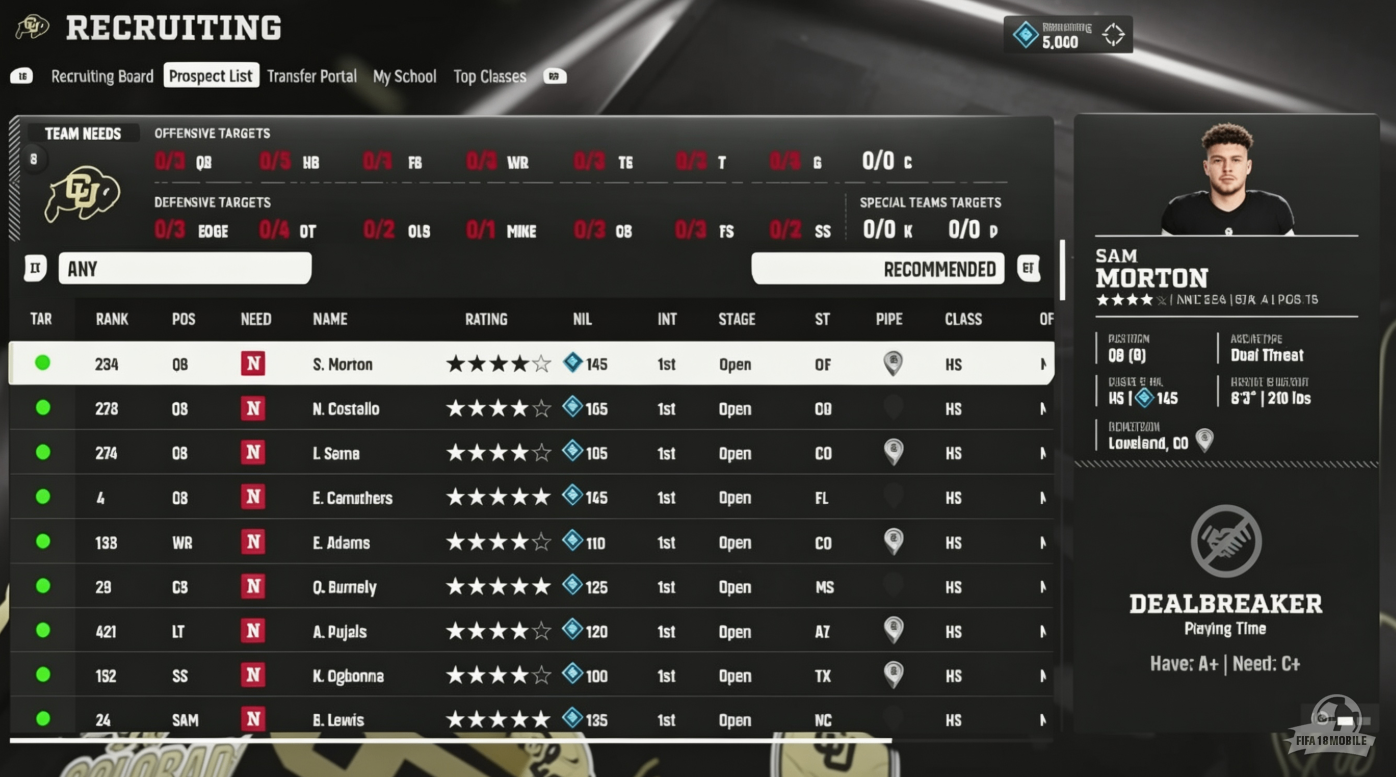
They offer several advantages:
Lower recruiting costs than elite prospects.
Better chances of competing against larger schools.
Enough potential to develop into long-term starters.
Rather than spending most of your budget on one expensive recruit, recruiting several quality three-star players usually produces a stronger overall roster.
One of the biggest mistakes beginners make is assuming that a higher national ranking guarantees a better player.
The scouting system doesn't work that way. Two three-star recruits may have dramatically different development potential despite having very different national rankings. Lower-ranked players can still become excellent starters if they possess strong development traits and fit your team's needs.
Because of this, treat every three-star recruit as a potential opportunity instead of focusing only on players near the top of the rankings.
The NIL system makes recruiting more competitive than previous games.
Some recruits require large NIL investments before they'll seriously consider your school, while others ask for very little despite having similar overall potential.
When reviewing recruiting boards:
Compare each player's expected NIL requirement.
Prioritize affordable prospects with similar ratings.
Save your budget for multiple quality recruits instead of one expensive signing.
For smaller schools, finding these overlooked players is often the fastest way to improve your roster.
Some recruits have much higher long-term potential than their initial ratings suggest.
These "gem" players often develop faster and reach higher overall ratings than ordinary recruits. Spending scouting points on identifying these prospects can produce far greater value than simply chasing highly ranked players.
Finding even a few gem recruits each season can significantly strengthen your Dynasty over several years.
Recruiting isn't only about talent. Every player also has priorities that influence whether they remain interested in your program.
Certain deal breakers are much easier to manage than others.
For beginners, safer deal breakers include:
Playing Time
Proximity to Home
Coach Prestige
On the other hand, deal breakers related to Playing Style or Pro Potential can become difficult to maintain throughout a long Dynasty. If those requirements change during future seasons, you may lose valuable recruits or transfers despite having invested significant recruiting resources.
Junior College recruits can provide immediate help, but they remain with your program for fewer seasons.
Whenever similar talent is available, recruiting true freshmen usually provides better long-term value because they have more years to develop and contribute before graduating.
For rebuilding programs, long-term roster stability is often more important than short-term improvements.
Eventually you'll run out of scouting hours.
When this happens, the Playing Time grade becomes a useful tool for narrowing your recruiting board.
If two recruits appear similar but one has a noticeably better Playing Time grade, that player is often the safer option to prioritize. While it doesn't guarantee better development, it provides useful information when you can't fully scout every prospect.
Every position includes multiple archetypes, and selecting the right one is just as important as overall rating.

Some examples include:
Quarterbacks: Balanced or dual-threat archetypes offer versatility for most offensive systems.
Running Backs: Faster archetypes excel in open-field offenses.
Wide Receivers: Speed-focused receivers create more big-play opportunities.
Tight Ends: Vertical-threat archetypes stretch defenses effectively.
Offensive Linemen: Well-rounded linemen provide consistent pass protection and run blocking.
Defensive Tackles: Gap specialists offer balanced attributes for multiple defensive schemes.
Linebackers: Faster coverage-focused linebackers perform well against both the run and pass.
Cornerbacks: Field corners generally combine athleticism with solid coverage abilities.
Safeties: Coverage specialists and hybrid safeties offer flexibility in modern defensive formations.
Instead of recruiting solely by overall rating, build a roster whose archetypes complement your preferred style of play.
Recruiting success comes from maximizing every available resource. Whether you're spending scouting hours, recruiting points, or CFB 27 Coins, avoid investing everything in one highly contested prospect. Building depth through multiple affordable recruits often creates a stronger Dynasty team than relying on a single elite signing, especially during the early seasons of a rebuild.
Many new Dynasty players slow their progress by making avoidable mistakes:
Chasing only five-star recruits.
Ignoring affordable three-star prospects.
Assuming national rankings determine player quality.
Overlooking player archetypes.
Recruiting players with difficult deal breakers.
Spending too much recruiting budget on one prospect.
Avoiding these mistakes allows your recruiting classes to remain balanced and sustainable over multiple seasons.
Successful recruiting in College Football 27 is about identifying value rather than simply collecting the highest-ranked prospects. Prioritize affordable three-star recruits, search for hidden gems, monitor deal breakers carefully, and recruit archetypes that match your offensive and defensive systems. By consistently making efficient recruiting decisions, even smaller programs can develop into national contenders over time.
Our Authors
Reader, Writer, Web Designer, Husband, Son, Brother, Engineer